

How Shinjiro Koizumi's Shrine Visit Hinders Japanese Foreign Policy
The Japanese Defense Minister's historical pride might just get in the way of important policy goals.


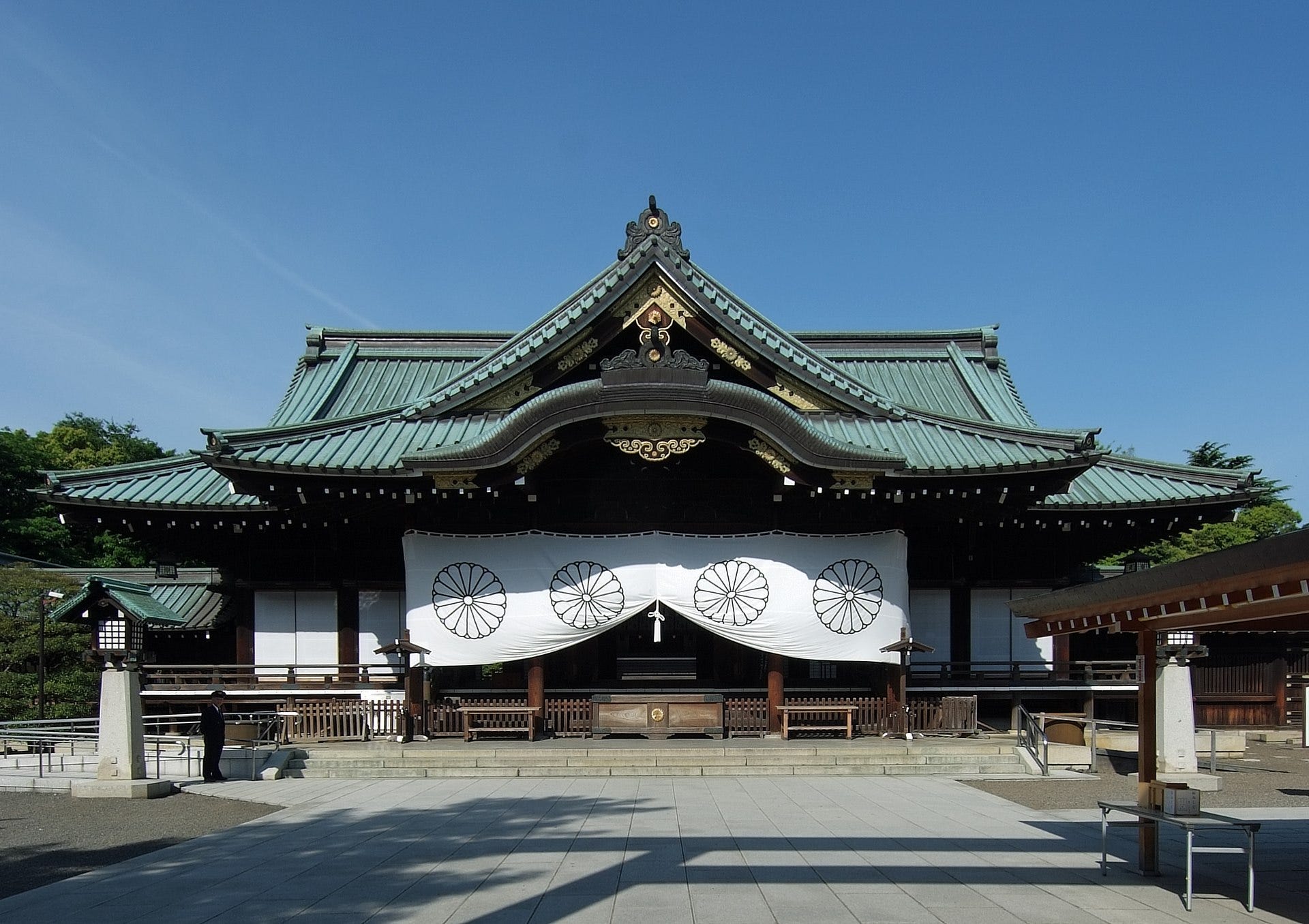
Japanese Defense Minister Shinjiro Koizumi recently visited the infamous Yasukuni Shrine (where Japan honors 14 Class-A war criminals responsible for countless Chinese and Korean deaths) on the 81st anniversary of Japan’s WWII surrender. Prime Minister Sanae Takaichi, however, broke from her usual unwavering national pride by skipping the visit to avoid straining relations with South Korea, which she has made significant moves to strengthen in the interest of countering China together.
Takaichi seemingly avoided the shrine to both avoid damaging the very relations she has built so far with Korea and also to avoid inciting any Chinese aggression. The focus remains on the two nations which tragically lost many of their people because of the very Japanese war criminals that Koizumi paid respects to.
But while Koizumi’s visit to the shrine may have been seen positively by Japan’s right-wing establishment, was this really the time for such a stunt?
Muddying Counter-China Cooperation
South Korea and Japan are the two major East Asian nations that are aligned with the United States, united by their desire to counter China. However, historical realities often got in the way of efficient cooperation between the two nations. South Korea, formerly a Japanese colony under brutal repression, carried many grievances about the treatment of its people that often placed it in contention with the Japanese desire to cooperate.
While America typically sought to eliminate this boundary and encourage cooperation between the two, Japanese Prime Minister Sanae Takaichi put in substantial effort herself to strengthen relations as well. She has held numerous bilateral summits with Korean President Lee Jae-Myung, for instance, and her avoidance of the shrine was another attempt to maintain strong diplomatic relations. From the American perspective, Korea-Japan cooperation is paramount to create a powerful barrier against China, which actively seeks to encroach upon the borders of its neighbors and the security of the United States.
As the Minister of Defense, Koizumi’s participation in Takaichi’s productive dialogue with Korea is critical, yet the recent shrine visit gives off an entirely different message. It communicates to South Korea that Japan is indifferent to its suffering, and that it still sees the brutal repression of the Korean colony as an instance of national pride. Is this productive for counter-China relations? Absolutely not.
Poking the Red Dragon
Alongside building relations with Korea, Japan also needs to avoid angering China. Beijing routinely protests the Japanese government’s visits to the Yasukuni Shrine, and public sentiment in China is overwhelmingly negative toward Japan. That said, China’s recent activity in regions like the South China Sea indicates a rising willingness to directly confront its enemies.
With the U.S. already moving military resources out of Asia to secure its front in the Iran conflict, Japan, which technically does not have a fully-fledged military of its own, cannot risk angering China. Without the usual oversight of the American military, it is arguably in a weak position to adequately ward off Chinese aggression, and it is terrible optics for U.S. allies to appear defenseless while Washington fights an invisible threat in the Middle East.
Societal Self-Destruction
Koizumi’s stubborn refusal to fall in line with Japan’s greater diplomatic interests illuminates a deeper issue that currently plagues the nation, one that maintains similar intransigence and is currently fracturing Japanese society: the illusion of stability.
When Takaichi won the premiership in 2025, many voters hoped that the “Iron Lady of Japan” would be the one to topple the country’s ruthless work culture. Such culture has caused serious problems threatening the future of Japan’s entire civilization, like plummeting birth rates, a widening generational wealth gap, and a disturbing phenomenon called “karoshi” (death from overwork). However, Takaichi, upon entering office, dedicated herself to the complete opposite.
In fact, one of her first vows to the public was to “work, work, work, work, and work.” Suddenly, the excitement vanished. Takaichi would similarly post online, gloating that she slept only 2 or 3 hours per night and had even held crucial meetings deep into the night, forcing the bureaucracy to adapt to her absurd schedule.
While Takaichi’s inhuman work ethic is admirable and her posts are quite funny, her lack of attention to the actual needs of Japanese society darkens the sky over the island nation. The conservative establishment has a functionally irremovable hold over Japanese policy-making, so the changes that need to be made to correct the course of their civilization can only come from said establishment.
But, clearly, there is no willingness to make such changes.
Correcting Course
To her credit, Takaichi made a positive move by skipping the shrine visit, and she does appear to be focusing more on correcting birth rates and work culture in recent months. Still, at the heart of her premiership is counter-China policy and the revival of Japanese militarism. In such an administration, the Defense Minister’s behavior is nearly as important as the Prime Minister herself.
Koizumi’s stubborn refusal to align with Takaichi is another highlight of the Japanese right-wing shooting itself in the foot. If the current administration wants tangible national improvement, they must prioritize the future over the past and look inward.
Dutiful self-sacrifice is a core tenet of Japanese traditionalism. Figures like Shinjiro Koizumi must rediscover this and let go of their prosperity-hindering convictions.
 | A guest post by
|